

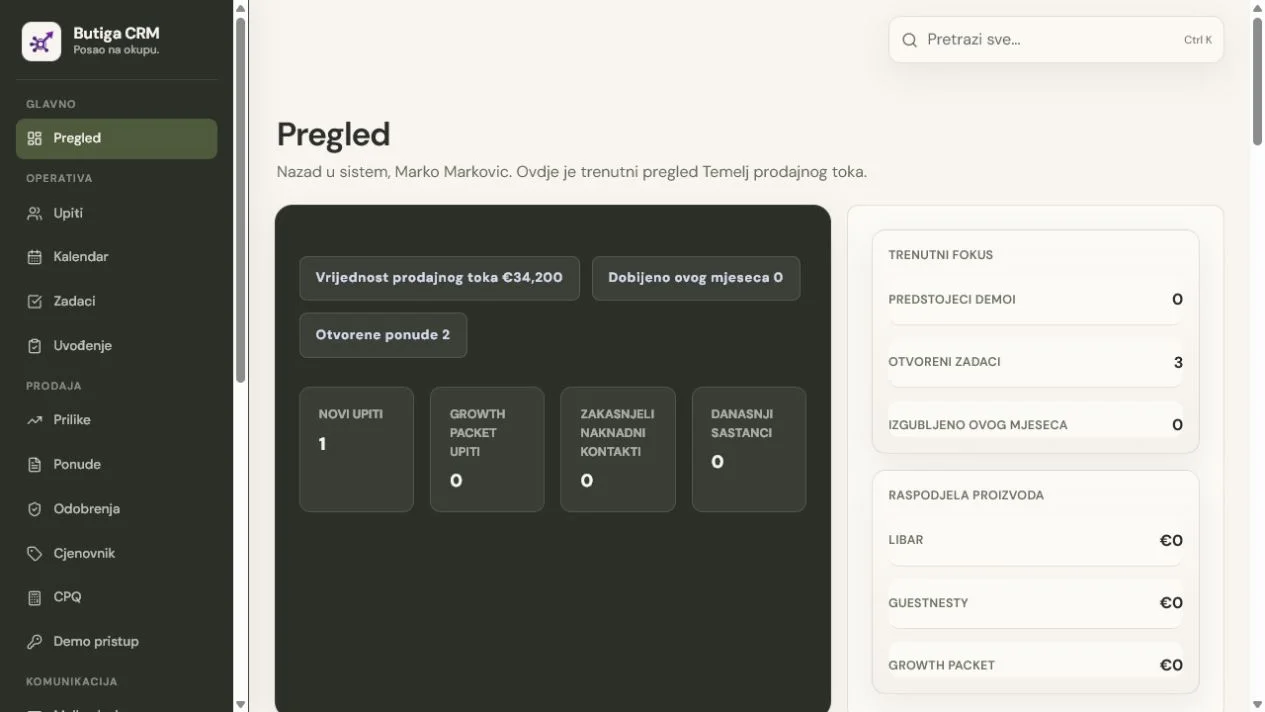
A CRM for a small business should answer everyday questions: who last spoke to the customer, what was sent and offered, who owns the deal, what the deadline is and what happens next. Butiga keeps these answers with one customer record. Sales no longer depends on a private inbox, multiple Excel versions and reminders visible only to their creator.
How a small business knows it has outgrown a spreadsheet
Excel can keep the contact list in order. The problem begins when the same line should explain the conversation, the open offer, the latest price change, the promised deadline, the owner and the next follow-up. The more people participate, the harder it is to know which information is valid.
- Inquiries arrive in more places.
Email, call, recommendation and field conversation do not always end in the same record. - The client depends on one person.
When a colleague is away, the rest of the team doesn't see the whole conversation or what's promised. - Offers have multiple versions.
It is difficult to quickly confirm what was sent, at what price and which version was accepted. - Follow-up stays in your head.
The next contact has no owner or deadline, so a good opportunity goes quiet without a clear reason. - The owner lacks an overview.
To answer “What can we win this month?”, spreadsheets and messages first have to be combined. - Work handoff loses details.
Operations receives a brief retelling instead of the quote, scope and agreed next steps.
One record of a client instead of five unrelated places
In Butiga, contacts, companies, owners, activities, business email, meetings, quotes, notes, tasks and the next step can stay together. The pipeline shows where the opportunity stands, while the dashboard collects items needing attention: new enquiries, open tasks, overdue contacts, meetings, open quotes and active sales value.
Illustrative example: from the first email to the start of work
- A new enquiry arrives. The company and the contact receive their records, source of inquiry and the person who takes it.
- Communication stays with the customer. The seller reads or sends a business e-mail and records an important conclusion after the call.
- The next step is recorded. The lead gets an owner, deadline and next activity instead of a note without a reminder.
- The opportunity enters the pipeline. The stage, estimated value and expected date of the decision give the company's owner a more realistic review.
- A controlled offer is being sent. The items and prices come from the price list, and the sent version remains tied to the client.
- The won deal is handed over. The accepted quote, promised scope, dependencies, onboarding owner and initial tasks stay together.
Note: This example uses a real Butiga product workflow. Customer names, amounts and dates on the screen are for demonstration.
What a small company gets in everyday work
- a shared register of leads, contacts and companies;
- a business e-mail related to the client and the sales context;
- a pipeline with stage, owner, value and expected decision date;
- tasks, meetings, deadlines and late work warnings;
- quotes linked to the price list, with retained versions;
- an overview of the active sales flow and the items that require attention;
- an organised handoff of won work to the person delivering it;
- Android access to supported leads, business email and activities.
Getting started without moving every old record
A small business does not need to move every old spreadsheet, closed deal and address book contact on day one. First agree on what makes a qualified lead, which stages you use, who owns each record, when to enter the next step and what must exist before sending a quote or handing work over.
Then you can enter active clients and open opportunities. Historical data is added only when they have real value for future communication or decision. The way and extent of introduction depends on existing data and processes; we do not promise the same deadline for each company.
Who Butiga CRM is for
- A small B2B business
selling through conversations, meetings and quotes, rather than only through an online shopping cart. - An owner involved in sales
needing an overview without asking every team member for a report. - A team with several people in contact with customers
who wants communication and the next step not to remain private. - A service business
needing accepted quotes and promised scope to reach operations in an organised way.
When Butiga is probably not the right choice
If you need primarily an accounting program, a fiscal register, a warehouse, a webshop or a mass marketing system, Butiga does not replace these tools. If a job is run by one person with a small number of simple clients and no follow-up is lost, a well-ordered table can still be sufficient. CRM brings value when a common context, responsibility and deadline become more important than the contact list itself.
Start with the process that does the most damage today
You do not have to explore every feature during a demo. Bring one typical example: a lost enquiry, an unanswered quote or a poor handoff to operations. We will show where the customer, email, owner, deadline and next step would sit in Butiga, so you can assess whether this way of working fits your business.
For more details, see leads and contacts, business e-mail, the sales pipeline and quotes and price listFor work outside the office, check the Android CRM application, and for an assessment on your example book a demo.
Prepare your tool selection using an example from your company
Use CRM tools and checklist for small businesses to determine what is missing in the current process. If offers go through multiple decisions, see how to set up a CRM sales pipelinewith illustrative examples for Podgorica and Budva.