
Butiga is built for sales processes where a deal involves several conversations, people and documents. Instead of keeping customer data in Excel, communication in private inboxes and quotes in folders, every important step stays with the same record. This gives salespeople a clear next move, managers a view of the process, and operations teams organised context when a deal is agreed.
Six areas that follow real sales work
Features are not separate modules your team must connect manually. A lead can become a company and contact, communication stays with the customer, opportunities move through the pipeline, and quotes and tasks follow what was actually agreed.
- Leads, companies and contacts.
Keep the enquiry source, owner, value, priority, interest and relationship history without parallel spreadsheets. - Business email with CRM context.
Connect Gmail or IMAP/SMTP, reply from the right address and confirm the suggested record for an incoming message. - Sales pipeline and follow-up.
Track the stage, owner, deadline and people involved in the decision. The overview highlights opportunities without a next action or key contact. - Quotes and price list.
Prepare a controlled quote, track its version and open a buyer room for review and a decision. - Tasks and Android app.
Find a client, review communication and today's obligations, and note the next step while the conversation is still fresh. - Reports and team control.
Review activities, the value of open opportunities and the sales pipeline using the data your team works with every day.
What changes in everyday work
The main difference is that each person can continue where the previous person left off. When a customer replies to an email, the salesperson sees the related opportunity. When preparing a quote, the previous conversation and agreed scope are visible. When a deal is handed over to operations, the commitments, deadlines and promises made to the customer stay with it.
An illustrative example of the process
- An enquiry arrives and gets an owner. The new lead is recorded with its source, contact and next step.
- Communication stays with the customer. An incoming message may receive a suggested link to a lead, but the user confirms every change.
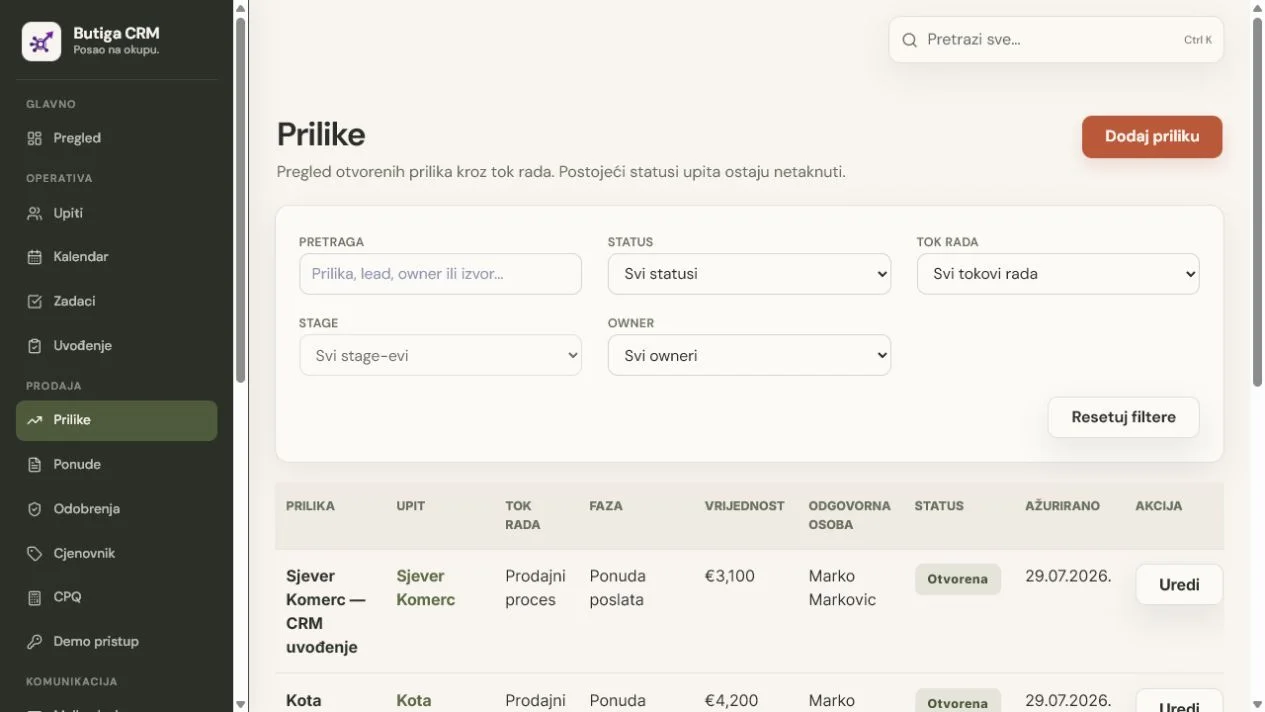
- The opportunity enters the pipeline. The team sees the phase, the value, the responsible person, the deadline and the key participants in the decision.
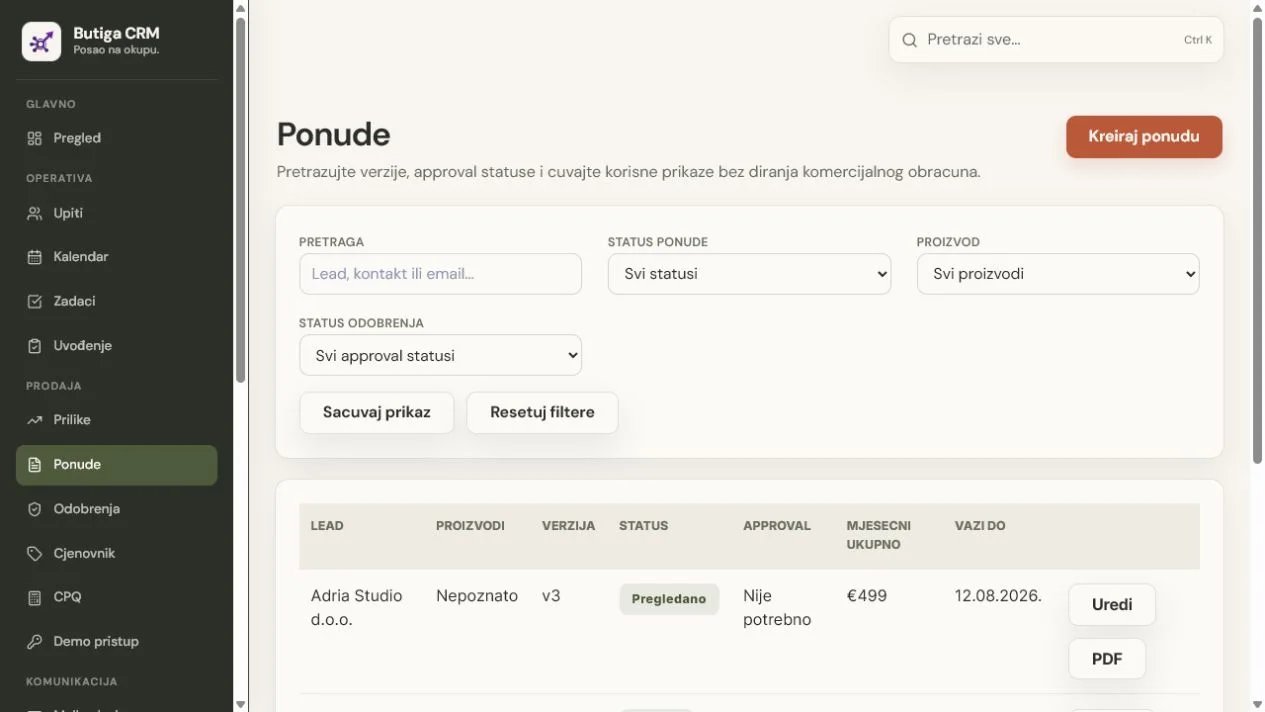
- The quote is prepared and tracked. The active version remains with the opportunity, and the customer gets a controlled area for review and decision.
- The agreed deal is handed over without losing context. Operations receives the customer details, agreed scope, commitments and next tasks in the record.
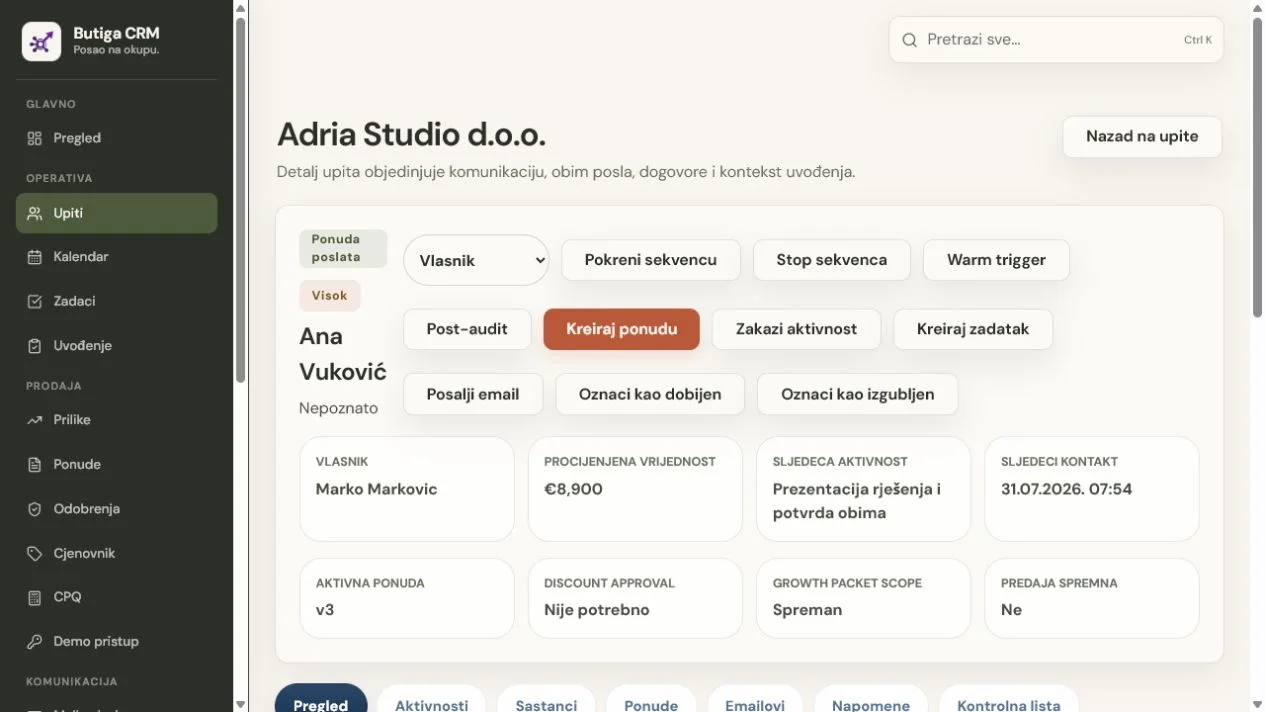
Note: This example describes a typical product workflow. Names and data in the screenshots are for demonstration and do not represent a real customer.
One record of a client instead of five places to check
A customer record can connect the contact, latest communication, open quote, task, owner and deadline. Answering the simple question “What comes next?” no longer requires checking a spreadsheet, messages, a forwarded email and the quotes folder.
Who this way of organising work is for
- B2B sales teams
when several people manage opportunities, communication and follow-up. - Service businesses
when the quote depends on the conversation, scope of work and agreed terms. - Agencies and consultants
when customers, quote versions and deadlines are managed in parallel. - Field sales
when the contact and the next step must also be available on the phone.
When Butiga is probably not the right choice
If you only need a personal email client, a tool exclusively for bulk newsletter campaigns or a simple spreadsheet without a defined sales process, you will not need some of Butiga's features. Butiga makes the most sense when sales involve a customer, conversation, responsible person, quote, deadline and clear handoff.
Start with your process, rather than a list of options
During the presentation, we first walk through your current workflow: who receives the enquiry, who owns the opportunity, where communication happens, how a quote is prepared and what operations needs after the sale. We then show the same process in Butiga. You can assess whether the features address specific places where you currently lose time or context.
For details on how to store and access data, see Butiga CRM securityIf you want us to go through your example, book a demo or send us questions over contact page.