

Speed up B2B sales by reducing the time between important decisions: new enquiries immediately receive an owner, every stage has a verifiable exit condition and every conversation ends with a concrete next step and date. Faster sales means less internal waiting, less time searching for information and fewer opportunities stalled without a clear reason, rather than more messages and pressure on customers. CRM should show where work is waiting, who must respond and what an opportunity needs to progress.
Find first where the process really slows down
Do not start with the general goal “we need to sell faster”. Take ten recent opportunities and note how long they waited between key events: enquiry and first response, conversation and agreed step, confirmed need and quote, quote and decision check, acceptance and operations handoff.
With each delay write down the reason. You will most often find one of the four problems:
- it was not clear who owns the opportunity;
- the following step did not have a date or a responsible person;
- the information required for the offer has been distributed by e-mail and notes;
- the approval of the price, discount or scope was awaited by a person who did not have a complete context.
Five Changes That Reduce Unnecessary Waiting
- Assign an owner when the enquiry first arrives. One person is responsible for the first response and the accuracy of the status.
- Define exit from each phase. The opportunity progresses when an event is confirmed, such as a scheduled conversation, confirmed scope or sent approved quote.
- Write down the next step while the conversation is fresh. The action, owner and deadline must be visible without opening a private inbox.
- Standardize your offer preparation. Arrange which information must exist before items, prices and deadlines are selected.
- Look at the exceptions, not every card. At meetings, review opportunities without activities, with overdue deadlines or too long in the same stage.
Process example: from enquiry to quote
- A new enquiry from Sjever Sistem enters CRM and automatically appears in the processing list.
- Milica takes ownership and schedules the first conversation. The deadline and activity stay with the customer.
- After the conversation, she records the confirmed need, approximate scope and decision participant.
- The opportunity passes in the preparation of the offer only when the data are sufficient to choose items and prices.
- An approved version of the offer is sent, and the following check gets the date before the task is completed.
- If the customer requests a change, the new version stays linked to the same opportunity and communication.
Note: The company, person and data are fictional. This example demonstrates a process, not a real customer's result.
How sales CRM helps
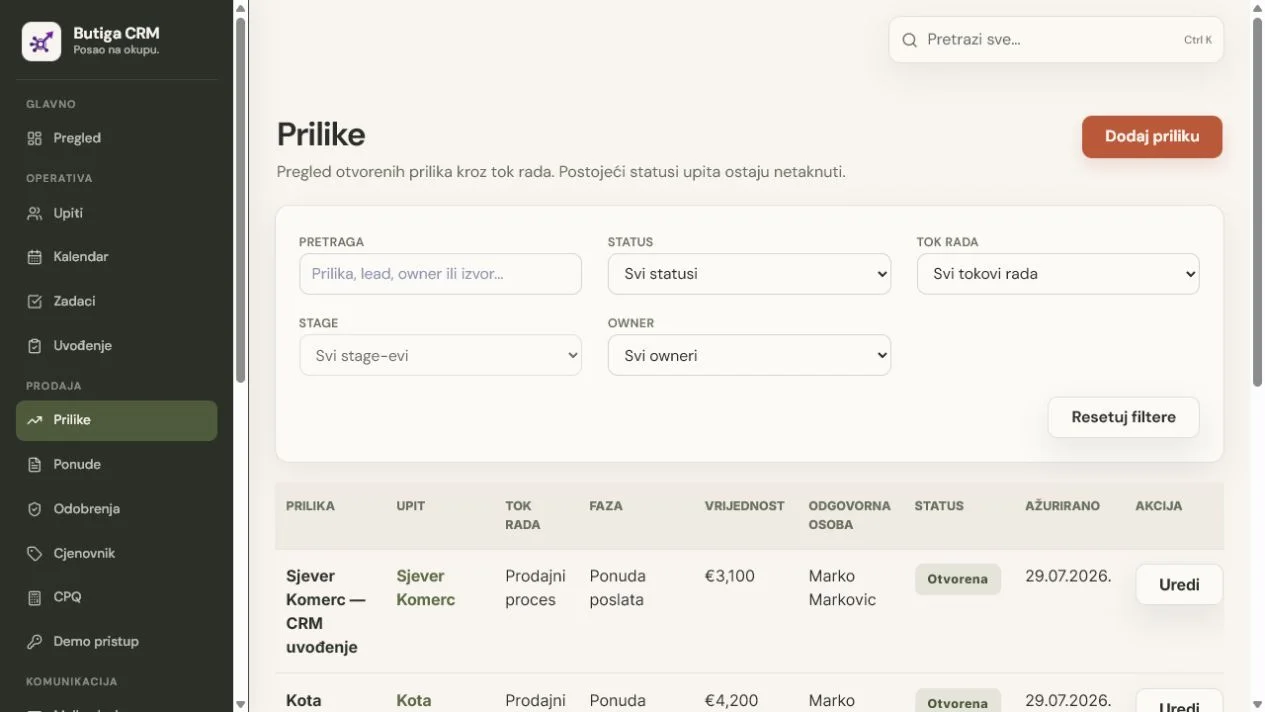
Sales CRM should bring together owners, stages, values, communication, active quotes and next activities. This reduces manual reconstruction of context before every call or decision. See how Butiga displays the sales pipeline, leads and contacts and quotes linked to the customer.
Measure waiting that you can change
A useful overview does not need dozens of charts. Start with first response time, active opportunities without a next activity, time in stage and quotes without a scheduled check. Each indicator should guide a decision: change the owner, agree on a new step, close an unrealistic opportunity or remove an obstacle.
Speed up the qualification, but don't skip it
The sales cycle is often extended because the opportunity becomes an offer before the team understands the need. Then the scope changes through multiple versions, the price is recalculated and the decision is postponed. A short qualification should answer a few practical questions:
- what the client is trying to change and why it's important now;
- Who uses the solution, and who approves the budget and the terms.
- which scope and deadline can be confirmed before the quote;
- which technical, legal or organisational barriers may prevent work;
- which is the next event that shows real progress.
If the answer is not known, do not invent the probability percentage. Bookmark the open question and the person who can provide the answer. This way the pipeline remains reliable and the manager distinguishes the active opportunity from the long-standing card.
Have a short meeting about exceptions
A weekly review does not need to cover every note. Filter opportunities without owners or future activities, overdue deadlines or unusually long time in a stage. Make one decision for each: continue with a concrete step, request missing information, change the owner, move it to a realistic stage or close it with a reason. This saves team time while improving the data used for planning.
Who needs more than this approach
If the sale includes public procurement, complex legal approvals, multiple legal entities or regulatory controls, the process must not be accelerated by skipping mandatory steps. Then it should distinguish a reasonable period from internal waiting and include responsible legal, financial and security persons.
Start with one active opportunity
Choose one currently stalled opportunity. Check its owner, last important event, required decision and next step with a date. To apply the same framework in Butiga, book a CRM demonstration using your sales process.